
End Abuse in Lanark
The Lanark County Sexual Assault and Domestic Violence Advisory Committee
The Lanark County Sexual Assault and Domestic Violence Advisory Committee: Joining Hands to End Violence in Lanark
Our Role
The Advisory Committee consists of representatives from various ministries and survivors who will work cooperatively to address service gaps and to ensure increased coordination and communication among the participants. Our partner organizations work to:
- Ensure that Protocols for Sexual and Domestic Violence are comprehensive and user friendly for the organizations involved and are updated periodically. (Protocols ensure client needs are met as the priority)
- Facilitate a plan for Public and Professional Education about Domestic and Sexual Violence and support its implementation
- Support the work of established sub-committees to achieve goals
Our Responsibilities
Our committee members are responsible for:
- Exchanging information and perspectives from their organization with the members at the table. (survivors will provide input)
- Providing information received at the table to their home agency co-workers to enhance information sharing and improved service delivery to clients
- Following up with actions as agreed to by the committee on projects
- Engaging in inter-ministry problem-solving in order to meet committee goals
- Identifying gaps in service with a view to assisting partner organizations, or collaborating on ways to advocate to the government for creative means of addressing those gaps
Our Mandate
Members of the Sexual Assault & Domestic Violence Advisory Committee will work together in a consulting capacity and make recommendations and suggestions on matters in the community pertaining to improving services to victims of violence; strengthening interagency relationships, collaborating on interagency protocols and working to develop a plan for prevention and public education on issues of sexual assault, domestic violence, intimate partner violence and gender-based violence.
Our Membership and Community Partners
The membership is cross-sectoral and representative of those community partners who provide investigative services, treatment, support and protection for victims of sexual assault, domestic violence, intimate partner violence and gender-based violence. Members of the committee represent their organization’s mandate for sexual assault, domestic violence, intimate partner violence and gender-based violence at the table. The membership includes, but is not limited to, representatives from the following agencies:
- Crown Attorney
- The Lanark County Sexual Assault and Domestic Violence Program – Hospitals
- Victim/Witness Assistance Program
- Police Services (Smiths Falls and OPP)
- Lanark County Interval House and Community Support
- Family and Children’s Services of Lanark, Leeds and Grenville
- Probation and Parole
- Open Doors for Lanark Children & Youth
- Rideau Community Health Services
- Lanark County Mental Health
- Victim Services Lanark County
- Catholic District School Board of Eastern Ontario
- Upper Canada District School Board
- Lanark, Leeds and Grenville Addictions and Mental Health/ Partner Assault Response Program
- Lanark County Social Services
- Lanark County Community Justice Program
- Lanark County Situation Table
- Shelter Movers
- United Way East Ontario
- Survivor Advocates

A Snapshot of Lanark County
Lanark County is located just west of the National Capital Region in Ontario, encompassing the towns of Carleton Place, Smiths Falls, Perth, and Almonte, as well as numerous rural townships and hamlets. According to the most recent reliable census data, the county’s population has continued to grow in recent years, rising to approximately 75,760 people in 2021, reflecting notable growth since earlier census counts.
Although smaller in population than large urban centres, domestic and sexual violence remain critical community concerns. Local agencies, crisis supports, and emergency services provide care to hundreds of people affected by violence each year.
Service Demand & Local Response
-
In recent years, community partners have seen substantial and sustained demand for crisis support services. For example, Lanark County Interval House and related supports responded to thousands of crisis calls and provided services to approximately 2,800 women and children in 2022–23, including shelter stays and outreach and crisis support.
-
The county has recognised intimate partner violence (IPV) as a community‑wide issue, and local police and community agencies have documented rising IPV and SADV‑related contacts. Between 2020 and 2024, more than 550 victims of sexual assault, domestic violence, and human trafficking were supported by victim advocate services with the Lanark County OPP, and local police services also reported increases in IPV case responses.
-
Lanark County Interval House’s crisis line has remained a vital resource, with thousands of calls annually reflecting ongoing need for support, safety planning, advocacy, and connection to other services.
-
Collaborative efforts — such as police‑partnered advocacy initiatives and provincial funding to strengthen victim supports — are underway to improve service navigation, training for first responders, and public education on intimate partner and gender‑based violence.
Local Healthcare & Support Programs
-
Lanark County’s hospitals and health services provide 24/7 access to specialized sexual assault and domestic violence care — including crisis support, medical assessment, safety planning, and referrals to community supports — through the Lanark County Sexual Assault & Domestic Violence Program.
-
Additional local resources include Victim Services (offering immediate practical support), crisis helplines, counselling programs, and partner agencies focused on safety and recovery for survivors of violence.
Safety First
Safety is a number one priority when dealing with cases of domestic and sexual violence. We have to keep in mind not only the victim’s safety, but also the safety of her/his family, friends, and neighbours.
In the top-left corner of this website, you will find the “Quick Escape” link. Click this link to automatically redirect your browser to a safe site in the event that you need to close the site quickly.
In Case of Emergency
Call 911
OPP (24hrs):
1-888-310-1122
Smiths Falls Police:
(613) 283-0357
Lanark County Interval House
1-800-267-7946
Or visit the emergency department at your local hospital
Keeping Yourself Tech Safe
When using the internet, make sure to consider the following safety tips:
- Use a safe computer when looking for help – consider the public library, a friend’s house, or an internet cafe or bookstore
- Create a new safe, non-identifying email account using webmail
- Don’t open unknown attachments or attachments from the abuser
- Consider clearing your internet history.
- Limit what you post on chats or online discussions – it will probably be archived and could become available to the public through searches
- Do not open a social networking (ie. facebook) account or if you already have one, be sure to limit the information that you feed
- For more information about internet and email safety (including instructions on clearing histories, caches, and cookies), visit shelternet.ca.
When using a phone, consider the following:
- Understand your cell phone options – you may want to turn off your optional location setting
- Use caller ID blocking by dialing *67 before making a call
- Delete conversations stored in TTY devices
- Minimize use of cordless phones and baby monitors

Assessing Your Safety
Make sure to ask yourself the following questions to assess your own situation:
- Does the abuser change just before becoming violent (e.g. does his/her voice deepen or face change colour)?
- Does your behaviour change before violence (for example, you experience headaches)?
- What circumstances usually exist before you are abused (for instance, pay day, sporting event, alcohol etc.)?
- Has the abuser threatened to kill you, your loved ones, or him/herself?
- Is your separation pending? Or, are you serving court orders?
- Are you in a new relationship?
- Are you pregnant?
- Does the abuser have access to weapons?
Planning Your Safety During a Violent Incident
If you have experienced violence in your relationship before, or you fear that a violent incident will occur in the future, consider making the following safety plans in advance:
- Make and practice plans to get out of your home when violence may occur
- Determine which rooms in your house are safest and make sure you can access a phone there
- Keep extra keys in a safe, accessible place
- Tell a friend or neighbour that you trust to call the police in the event of suspicious noises
- Develop a visual code (turning on a certain light, closing a particular curtain, or using a word) that tells friends and neighbours that you are in trouble
- Keep a bag of clothes, emergency money, and medications at a trusted friend’s or neighbour’s house for safe, quick access
- Keep crisis line numbers handy
Planning Your Children/Pet’s Safety
Sometimes parents stay in abusive relationships “for the children.” But children can be traumatized by being exposed to abuse. Planning for your children’s safety with them will help you make the necessary choices to live a life free of abuse. Consider the following in planning for your children’s safety:
- Tell children that they are only responsible for keeping themselves safe, not for protecting you during a violent incident
- Role-play with children what to do in the event that something scary happens
- Practice a signal and escape plan with children
- Talk with children about what to do if the abuser shows up
- Make sure that children know how to use the phone and dial 911

Planning Your Pets’ Safety
There is a strong link between domestic violence and animal cruelty. In a Women’s Shelter Survey conducted by the Ontario SPCA, easily more than half of the victims who responded had pets that were harmed or killed by their abuser. Knowing the threat to their pets, victims of abuse often delay leaving an abusive relationship because they are afraid to leave their pets behind. There are a few things to keep in mind to help keep your pet(s) safe:
- If your pet has been threatened, consider asking a friend or family member to care for it temporarily
- Keep your vet bills and license handy for proof of vaccination and ownership
- Discuss your concerns with the staff at Lanark County Interval House (1-800-267-7496), as the shelter partners with a number of local vets and volunteer foster parents for support

Planning Your Safety for Leaving
Keep in mind that violent incidents occur far more frequently around the time of separation. Keeping yourself safe when you are leaving is very important. Keep the following precautions in mind:
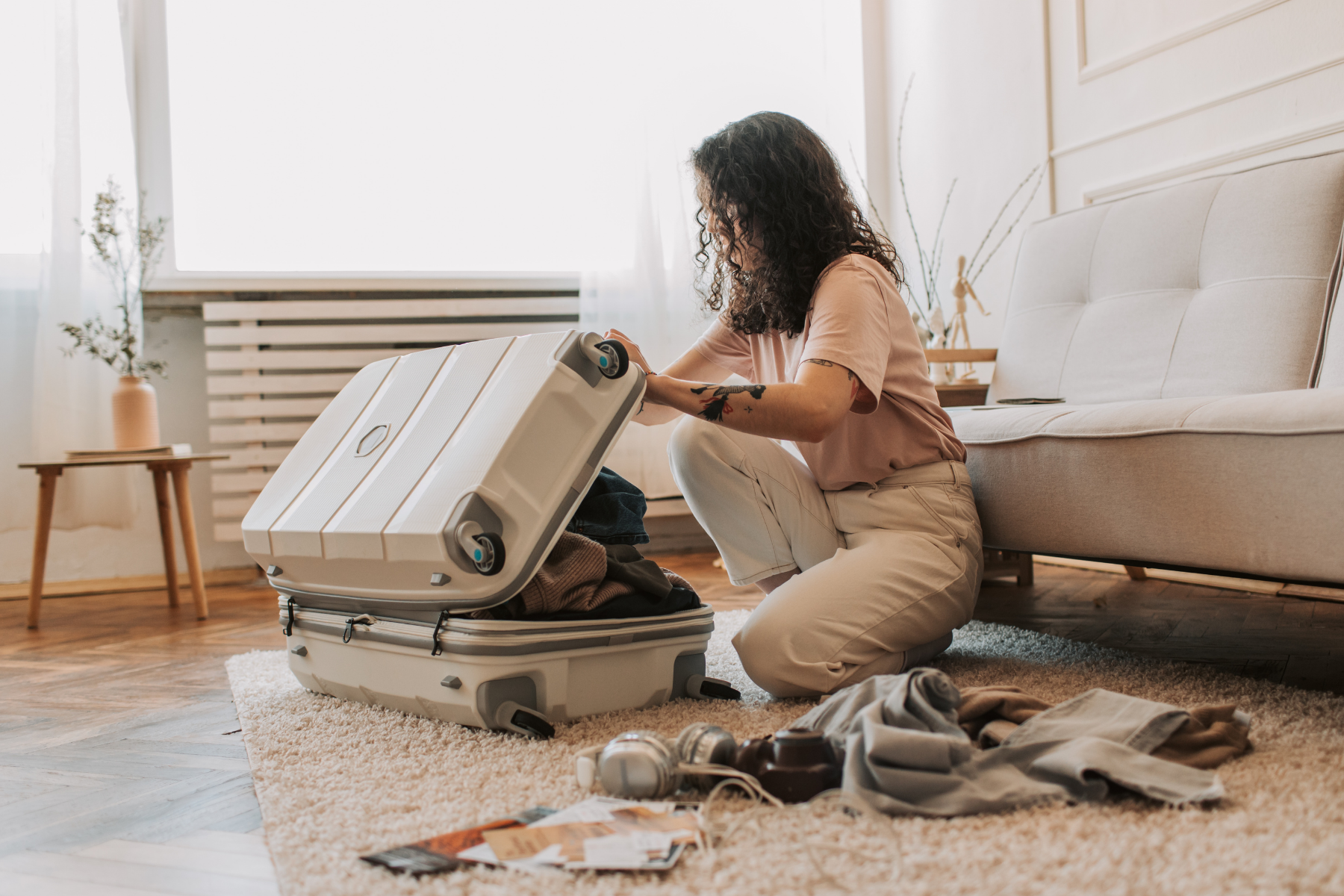
- Don’t tell the abuser that you are considering leaving or where you are going
- Contact a shelter about creating an individual safety plan for leaving
- Hide extra keys, money, medication in safe place that is not your home
- Consider taking with you:
- Personal identification – yours and your children’s (passport, birth certificate, Driver’s License, SIN card, health card, immigration papers, work permits)
- Medication
- Cheque book, credit cards, ATM cards
- Keys
- Copies of all court orders (ex. restraining orders, peace bonds, custody and access agreement etc.)
- Lease/rental agreements
- Small valuable objects like jewelry and other small sentimental items
- Personal laptop and flash drives, important disks etc.
- Address book or contact info
- Copies of your veterinarian bills and animal licenses
- Picture of the abuser and evidence of abuse (ex. a journal)

Safety and Sexual Assault
Sometimes, victims of sexual assault struggle with an array of emotions following an attack, but are unable to identify what has taken place as an assault. To learn more about the definition and signs of sexual assault, please visit our Sexual Violence section.
Although the majority of sexual assaults take place in homes and are committed by people we know, it is important that we also be mindful of our safety outside of the home. All individuals, but especially young women, should take the following precautions:
- There is safety in numbers – go out with friends you trust and develop a signal if you suspect trouble. Keep an eye on your friends to make sure they are safe.
- Never leave a drink unattended – always keep it with you or finish it before you must put it down
- If you aren’t feeling well at a party or other social gathering, make sure a friend stays with you.
- Remember that it may not be safe to be intimate with someone who has been drinking alcohol and/or taking drugs
- When walking alone, make sure to walk in well-lit, public areas
- Call out loudly for help if you suspect danger
Remember that sexual assault is never your fault – even if you didn’t take the above precautions – so don’t hesitate to seek help immediately. You are never to blame if you are sexually assaulted.
Domestic Violence
The language around this issue is tricky: abuse refers to the use of power and control tactics to dominate and intimidate another person. Woman abuse points directly to tactics that are used by a man to control his intimate female partner (wife, girlfriend, common-law partner, etc.). Domestic violence implies that both men and women can be victims and perpetrators, and that abuse can exist in straight, gay, and lesbian relationships.
Abuse Vs. Conflict
Abuse involves:
- Continued and increasing patterns of control, intimidation, manipulation, and violent behaviour by the abuser
- Potentially severe and life-threatening behaviours
In contrast, relationship or marital conflict:
- Is usually more equal between genders
- May once or twice escalate into one inappropriate push, slap, or thrown object (note, however, that even in the case of such an inappropriate push or slap, our police services have a zero-tolerance policy and, if they are contacted, are still required to lay assault charges.
- Is not about one partner controlling another
Mythbusting
According to recent Canadian data, many Canadians still misunderstand domestic violence by focusing on surface factors like stress or substances rather than the underlying dynamics of power and control.
Domestic violence occurs when one person needs to control another to feel powerful. Women continue to make up the majority of victims of domestic and intimate partner violence because many men feel that they are entitled to have more power than women. In 2024, police-reported intimate partner violence was about 3.5 times higher for women and girls than for men and boys, and women and girls made up nearly 8 in 10 of IPV victims aged 12 and older
Police-reported data also show that family violence remains widespread in Canada, with 142,724 victims of family violence and 128,175 victims of intimate partner violence in 2024.
However, because victims often do not report violence to police due to stigma, fear for personal safety, or a belief that it is a private matter, police figures underestimate the true scope of domestic violence in Canada.
Types of Abuse
Domestic violence can occur as isolated major incidents or as a number of minor incidents that don’t seem serious on their own, but together form an abusive pattern of behaviour.
ALL forms of domestic violence are hurtful. That being said, some forms are against the Criminal Law of Canada while others are not.
Domestic violence can take the shape of:
Emotional Abuse: Any behaviour that is intended to hurt, demean, isolate manipulate, or threaten another person. Examples include:
- Insults (e.g. “you’re fat, useless, stupid…”)
- Isolating the victim from friends and family
- Stalking and criminal harassment (e.g. repeated phone calls or text messages, following you, taking your mail, entering your home or workplace uninvited)
- Threatening children, pets, or extended family members
- Obsessive jealousy
- Threats to self-harm (e.g. “I will kill myself if you don’t…”)
- Destroying valued possessions
- Constant surveillance
Economic Abuse: Behaviours that are intended to sabotage the victim’s ability to be financially independent. Examples include:
- Withholding money or taking the victim’s money
- Controlling all major purchases
- Spending carelessly while family goes without healthy food and shelter
- Not giving access to bank accounts
- Sabotaging the victim’s efforts to keep, maintain, or upgrade a job
- Refusing to pay child support
Physical Abuse: Defines any unwanted physical contact (that might or might not result in visible injuries), including:
- Punching, slapping, shoving, burning, pushing down the stairs, biting, using body to block access
Sexual Abuse: Refers to forced sex or any degree of sexual activity (including oral), as well as demeaning a person’s sexual identity. Examples includes:
- Rape
- Hurtful or distasteful sexual activity
- Knowingly exposing a partner to HIV or other STIs
- Refusal to use or allow birth control
- Repeatedly cheating on partner
Spiritual Abuse: This occurs when an abuser does not allow the victim to practice her/his faith or forces the victim to participate in other spiritual or religious practices. Examples include:
- Humiliating your partner for practising a certain religion
- Forcing your partner to engage in different religious or ritual practices
See the Power and Control Wheel to learn more about the imbalance of power and control in abusive relationships.
Likewise, check out the Equality Wheel to learn about the balance of power and control in healthy relationships.
Both wheels were created by the Domestic Abuse Intervention Project, home of the Duluth Model approach for social change.
Learn More
Statistics
Keep in mind that most victims don’t call the police and that because definitions of abuse are complex, statistics don’t necessarily represent the full range of domestic violence that is possible. Still, some notable stats include:
• In recent years, an estimated 4.4 million Canadians aged 15 and older have experienced some form of intimate partner violence since age 15, based on self-reported survey data. Women report significantly higher rates of severe violence and coercive control.
• Police-reported intimate partner violence affects approximately 120,000–130,000 victims per year in Canada. Women and girls account for about 78 per cent of these victims.
• Rates of police-reported intimate partner violence increased steadily between 2020 and 2024, rising by roughly 15–20 per cent, with the sharpest increases among women aged 25–44.
• Among women who experience intimate partner violence, approximately 1 in 3 report fearing for their life at some point, and many experience repeated incidents over time rather than a single episode.
• Physical assault remains the most commonly reported form of domestic violence, followed by uttering threats, criminal harassment or stalking, and sexual assault. Psychological abuse and coercive control are widespread but far less likely to be captured in police data.
• Each year in Canada, 70–90 intimate partner homicides are recorded. Women make up approximately 75–80 per cent of victims, and in the majority of cases, the accused is a current or former male partner. A significant portion of male deaths are suicides by the perpetrator following the homicide.
• Children are frequently present in households affected by domestic violence. It is estimated that over 40 per cent of incidents involve children who directly witness or are otherwise exposed to the violence.
When violence is treated as a private or family matter, it remains hidden. When we don’t intervene or offer support, we allow the cycle of violence to continue.
The Cycle of Violence
Most domestic violence does not happen every minute of every day. Instead it takes the form of a cycle that increases in speed each time it goes around. The cycle generally occurs in four different phases:
The Build-Up Phase
- Some stressful factor (ie. dinner not being made, bad day on the job, a cold, a late bill etc.) can cause the abuser to feel powerless. (Note that the stress is not the root cause of violence; rather, the need to feel in control and powerful lies at the bottom of the cycle.)
- The abuser begins to act out: name-calling, accusations, etc.
- As the build-up increases, the victim tries to calm the abuser and anticipate his/her needs.
- the victim feels like (s)he is walking on eggshells.
The Act Out Phase
- Tension eventually leads to more severe, purposeful violence: a serious verbal, physical, or sexual attack
- Can happen once or repeatedly
The Justification/Rationalization Phase
- Also known as the honeymoon period
- The abuser defends himself/herself by blaming others or blaming stress
- The abuser deflects attention away from violence through romance (ie. flowers, special gifts or attention, etc.)
The Pretend that Things are Normal Phase
- After the abuser has rationalized the abuse, both partners try to pretend that everything is ok, until the build-up begins again
Generally, each time that the cycle repeats, the Act Out Phase becomes longer, more dangerous, and more consequential, while the Justification and Normal stage become quicker.
How Are Children Affected?
Linda Baker and Allison Cunningham (2007) share that “children are not passive witnesses to noise, tension and violence at home. Little eyes and little ears don’t miss much, soaking in sights and sounds.”
Between 2018 and 2023, there were an average of 70–90 intimate partner homicide deaths per year in Canada, and approximately 10–15 per cent of victims were children or youth, either killed directly or during incidents involving parental or caregiver violence. In many cases, these deaths occurred alongside the homicide of a parent, most often the child’s mother.
Children are not just witnesses in their own homes, they:
• see the victim assaulted or humiliated
• hear loud conflict and threats
• experience financial harm, including the denial of child support
• are blamed by the abusive parent for the abuse
• are manipulated into abusing or controlling the victim
• are dragged through prolonged court proceedings
• are determined to help
• may referee or try to rescue the victim
• may protect younger siblings or seek outside help
• learn that violence can get you what you want
• may learn that victims are weak
• learn that those who love you can still hurt you
• learn that abusive relationships are normal
10 Ways a Child Can Be Changed by Violence
The following list is taken from Linda Baker and Allison Cunningham’s publication Little Eyes, Little Ears (2007):
• Children are denied a good father and a positive male role model
• Abuse can harm the mother/child bond
• Children can develop negative core beliefs about themselves
• Children can be isolated from helpful sources of support
• Unhealthy family roles can evolve in homes with domestic violence
• Abuse destroys a child’s view of the world as a safe and predictable place
• Abuse often co-occurs with other stresses and adversities, compounding harm
• A child’s style of coping and survival may become problematic
• Children may adopt rationalizations for abuse
• Children can come to believe that victimization is inevitable or normal
Important Risk Factors
The most common risk factor leading to a domestic violence homicide is pending or actual separation. Other important risk factors include:
- an escalation of violence
- a history of domestic violence, stalking or other obsessive behaviours by perpetrator
- the perpetrator has reported being depressed
- health or financial issues
- a gambling addiction
- isolation
- and conflict with extended family members
Why do people stay?
Understanding why people stay in abusive relationships requires us to think about our own assumptions first. For example, why are we not asking “why doesn’t the abusive partner stop abusing?”
We need to be very careful not to blame the victim. But unfortunately, sometimes just asking this question makes us guilty of victim blaming. As well, we need to stop saying that “this would never happen to me.” Just about every victim of domestic violence has wondered how this possibly could have happened to her (or him).
In order to understand why people stay in abusive relationships, we need to really think about the barriers that keep them in those relationships (one of which may be our tendency to suggest that the victim – and not the abuser – needs to take action). Other barriers include:
- Victims lack financial resources to be independent and fear poverty
- Victims are concerned about the disruption in their children’s lives should they separate or seek support from a shelter (for instance, moving to a different community or school)
- Abusers threaten to abduct children, fight for sole custody, or refuse to pay child support
- Abusers may also threaten to harm or kill children, pets, extended family members, or themselves in the event of a separation
- People with disabilities or those who are not Canadian Citizens may rely on their partners for additional support (like attendant care or immigration sponsorship)
- Victims may face additional language barriers and rely on their abusive partners for translation
- Victims fear that nobody will believe them or the social stigma that comes with reporting
- Victims do not fully understand their rights
- Victims are told by their particular churches, family members, friends, etc. that they should stay in the relationship for the sake of the children
- Victims feel that they are to blame for the abuse
Police and Crown Obligations
When police are contacted regarding a domestic violence complaint, whether by the victim or by someone else, the police officers are required to do an investigation. If this investigation leads the police officers to reasonably believe that a person has committed a criminal offence against an intimate partner, then the officers must lay appropriate criminal charges.
An intimate partner may be a current or former partner, and applies to same or opposite sex partners and also applies to dating, common-law, or married partners.
These charges are laid by the police officers – not by the victims. The police officers must lay charges where reasonable and probable grounds exist, and may not make their decision to lay or not lay charges as a result of a victim’s request.
Once the charges are laid, a Crown Attorney will review the charges and determine if there is a reasonable prospect of conviction, and will also request further investigation to be done in some cases (interviewing further witnesses, taking photographs, seizing evidence, etc.).
If a victim wishes to talk with a Crown Attorney about the charges once they have been laid, s/he should contact the Victim Witness Assistance Program and request a meeting with the Crown Attorney.
As stated in the Crown Policy Manual for the Ministry of the Attorney General, “domestic violence is not a private family matter – domestic violence offences are criminal acts and should be prosecuted as vigorously as other serious criminal matters.”
Crown Attorneys have an obligation to prosecute domestic violence offences where there is a reasonable prospect of conviction and where it is in the public interest to do so. The Crown Policy Manual also indicates that “given the prevalence and danger of spouse/partner abuse and the dangers inherent in it, it will usually, although not always be, in the public interest to proceed with these prosecutions where there is a reasonable prospect of conviction.”
If a victim wishes to provide further information about the incident itself, s/he should contact the investigating officer to arrange to meet and provide this further information.
If a victim (or anyone else) wishes to report a breach of release conditions, he or she should call the police immediately to report this and request to speak to an officer – it does not need to be the investigating officer who is spoken to as he or she may not be on duty, and all officers will have access to prior reports and be able to deal with the matter.
Sexual Violence
Sexual violence generally refers to the categories of Sexual Assault (forced sexual activity without consent) and Child Sexual Abuse (when children under 16 are used for sexual purposes).
Mythbusting
Myth #1: Most sexual assaults are committed by strangers.
Reality: Most sexual assaults are committed by perpetrators known to the victim (for instance, acquaintances, dating partners, or family members). Sometimes, because a victim knows the perpetrator, they are less likely to recognize that the assault is a crime – but it is.
Myth #2: Men cannot control their sexual urges, so if a woman arouses her date, she deserves what happens.
Reality: Firstly, men can control their urges. Secondly, sexual assault is not about passion or desire – it is about power and control. And thirdly, the victim is never to blame for sexual assault. Even if someone engages in kissing and touching, they can still say “no more.”
Myth #3: Victims will often lie about being sexually assaulted because they feel guilty about having sex.
Reality: Sexual assault continues to be one of the most underreported crimes in Canada, and court proceedings often place intense scrutiny on the victim’s actions and credibility. False reports are rare.
Myth #4: The highest number of sexual assaults are perpetrated by men of a certain race, religion, economic status, or ethnicity.
Reality: Sexual assault is perpetrated by people from every racial, economic, ethnic, and social group. The vast majority of perpetrators, however, continue to be men.
Myth #5: Women cannot really be sexually assaulted by their partners, boyfriends, or husbands.
Reality: The law grants all individuals the right to say no to sexual activity, even in dating, common-law, and married relationships.
Myth #6: Men cannot be sexually assaulted.
Reality: Men too can be – and are – sexually assaulted. Most often, the perpetrator is another man, though women can also be perpetrators. Social expectations about masculinity contribute to underreporting, as many men fear stigma or disbelief. Effective sexual assault prevention requires us to understand – and challenge – how gender roles affect everyone.
Statistics
• Approximately 1 in 3 Canadian women report experiencing at least one incident of sexual assault since age 15, based on self-reported survey data.
• Sexual assault is the most underreported violent crime in Canada. Fewer than 1 in 10 sexual assaults are reported to police, regardless of the victim’s gender.
• Women and girls continue to make up the majority of victims. In recent years, they have been 5 to 7 times more likely than men to be victims of police-reported sexual assault.
• Most victims know the perpetrator. In self-reported data, about 70 per cent of sexual assaults involve someone known to the victim, including friends, acquaintances, dating partners, or family members.
• Men who experience sexual assault are more likely than women to be assaulted by acquaintances, friends, or non-spousal family members, and significantly less likely to report the assault to police.
• Young people are disproportionately affected. People aged 15–24 experience the highest rates of sexual assault, with young women facing particularly elevated risk.
What is Consent?
Giving consent means that you have communicated “yes”, without the blur of alcohol and/or drugs, and without the pressure of threats, blackmail, or coercion.
Most sexual assaults continue to involve coercion and not necessarily extreme physical force. Examples of coercion include “I’ll tell everyone about you” or “If you do this once, then I’ll” or “If you love me, then…”
You have the right to say “no” or “stop” or “I don’t like this anymore” at any time while you are engaging in sexual activity. If you say words or communicate through body language that you do not want to continue, then you are no longer giving consent for sexual activity. Pushing somebody away, for instance, is an example of no longer giving your consent.
Potential Effects of Sexual Assault
- Physical injuries – though many assaults take place without
- Sexually Transmitted Infections
- For women – unwanted pregnancy
- For men – sexual dysfunction & questioning one’s own sexual identity
- Nightmares, insomnia and other sleep disturbances
- Depression, anxiety, mood swings
- Fear, anger, inability to trust, denial, self-blame
- Drug and alcohol abuse
Steps to Take If You are Sexually Assaulted
Consider taking these steps immediately if you are sexually assaulted:
- Go to your local hospital emergency department (the staff there will support you with immediate healthcare, crisis intervention, crisis counseling, safety planning, follow-up, referrals, advocacy, and forensic evidence collection)
- Visit your family doctor or local Community Health Centre
- Or if not possible, go to a safe place and contact a trusted friend
- Report the assault to the police (if you choose to report the assault, try not to shower after the assault as it damages evidence; also, make sure to keep all the clothing that you were wearing at the time of the assault)
Child Sexual Assault
Another form of sexual violence is Child Sexual Abuse. This crime occurs when a child under the age of 16 is used or exploited by an adult or adolescent for sexual purposes (either directly or indirectly). Examples of child sexual abuse include sexual contact, voyeurism, exposure, child sexual abuse material (including online), internet exploitation, and sexual exploitation for money or goods.
The age of consent for sexual activity in Canada is 16 years of age. Section 151 of the Criminal Code of Canada states that touching a person under the age of 16 for sexual purposes is a crime. There are, however, two “close-in-age” exceptions:
• A youth aged 12 or 13 may consent to sexual activity with someone who is less than two years older
• A youth aged 14 or 15 may consent to sexual activity with someone who is less than five years older
Both exceptions are void if the accused person is in a position of trust, authority, or dependency, such as a teacher, coach, caregiver, or family member.
What Do the Statistics Show?
Even more so than adult sexual assault, child sexual abuse is a crime that largely goes unheard and unseen — often occurring in children’s own homes or within their trusted circles. Children may not understand what has happened to them or may lack the language to describe their experiences. Many are afraid to disclose because they believe they are to blame or fear they will not be believed. Still, recent Canadian data show:
• The vast majority of child and youth victims of sexual abuse know the perpetrator. In police-reported cases, approximately 80–85 per cent of child sexual assaults are committed by someone known to the child, including family members, caregivers, or acquaintances.
• Girls are disproportionately affected. Girls experience sexual assault at rates 3 to 5 times higher than boys during childhood and adolescence.
• Family members remain a significant source of harm. Among family-perpetrated child sexual assaults, the accused is most often a male family member, accounting for over 90 per cent of cases.
• Online sexual exploitation has increased sharply. Police-reported incidents involving child sexual abuse material and online luring have more than doubled since 2020, reflecting increased internet access and unsupervised online activity among children and youth.
• Most child sexual abuse is never reported. Self-reported data suggest that fewer than 1 in 3 children who experience sexual abuse disclose it during childhood, and many do not come forward until adulthood — if at all.
Preventing Child Sexual Abuse
Keeping children safe requires informed, attentive adults who understand risk factors and warning signs. Key prevention steps include:
• Minimize opportunities for one-adult/one-child isolation, particularly in informal or unsupervised settings
• Monitor children’s internet use and teach them not to share personal or identifying information online
• Require criminal record and vulnerable sector checks for anyone working or volunteering with children
• Keep communication open and age-appropriate — teach children about their bodies, use proper anatomical language, explain what abuse is, and encourage questions
• Stay alert to changes in a child’s behaviour, emotions, routines, or physical well-being
• Continue educating yourself about child sexual abuse, online exploitation, and protective strategies
How You Can Help
If you know somebody in need…
Knowing somebody who is or has been a victim of domestic or sexual violence can often leave neighbours, friends, and family members feeling helpless, confused, or angry. Sometimes the thing that we want to do the most – help – is the last thing that we know how to do.

In general, keep in mind these tips for helping victims of sexual assault:
- Listen to and believe her – so many victims do not report sexual assault because they fear that they will not be believed or understood
- Share with her that it was not her fault – sexual assault is never the victim’s fault
- Try to make her feel safe (offer a safe place for her to stay and make yourself available for comfort and support)
- Offer to drive her to your local hospital for immediate medical care
- Encourage other action like calling a crisis hotline or calling the police – but make sure to respect her decision should she choose not to file charges
- Support her in making her own decisions
Making a Difference on a Larger Scale
Remember that cases of domestic and sexual violence are not isolated incidents, nor are they restricted to certain families behind closed doors.
Domestic and sexual violence are ultimately about power and control – who has it and who believes that he is entitled to it.
So to truly end domestic and sexual violence, we need to dig deeper and challenge the social norms that work to empower – and disempower – select groups and individuals.
Keep these ideas close to heart as you work to make a difference in your community:
- Challenge gender roles that still, to this day, cast men as tough guys and women as passive and weak – both stereotypes hurt the potential of men and women
- In the same way, don’t hesitate to question sexist jokes, especially those about abuse and assault
- Model healthy, respectful, and equal relationships for your children and younger community members
- Raise your children and teach our youth to respect themselves and others
- Ensure that your workplace or school has (and promotes) policies against sexual harassment
- Take part in initiatives like the White Ribbon Campaign to promote awareness about these issues
- Volunteer with local agencies that are working to make a difference
Neighbours, Friends and Families
Neighbours, Friends and Families is a provincial public education campaign to raise awareness of the signs of woman abuse so that those close to an at-risk woman or an abusive man can help.
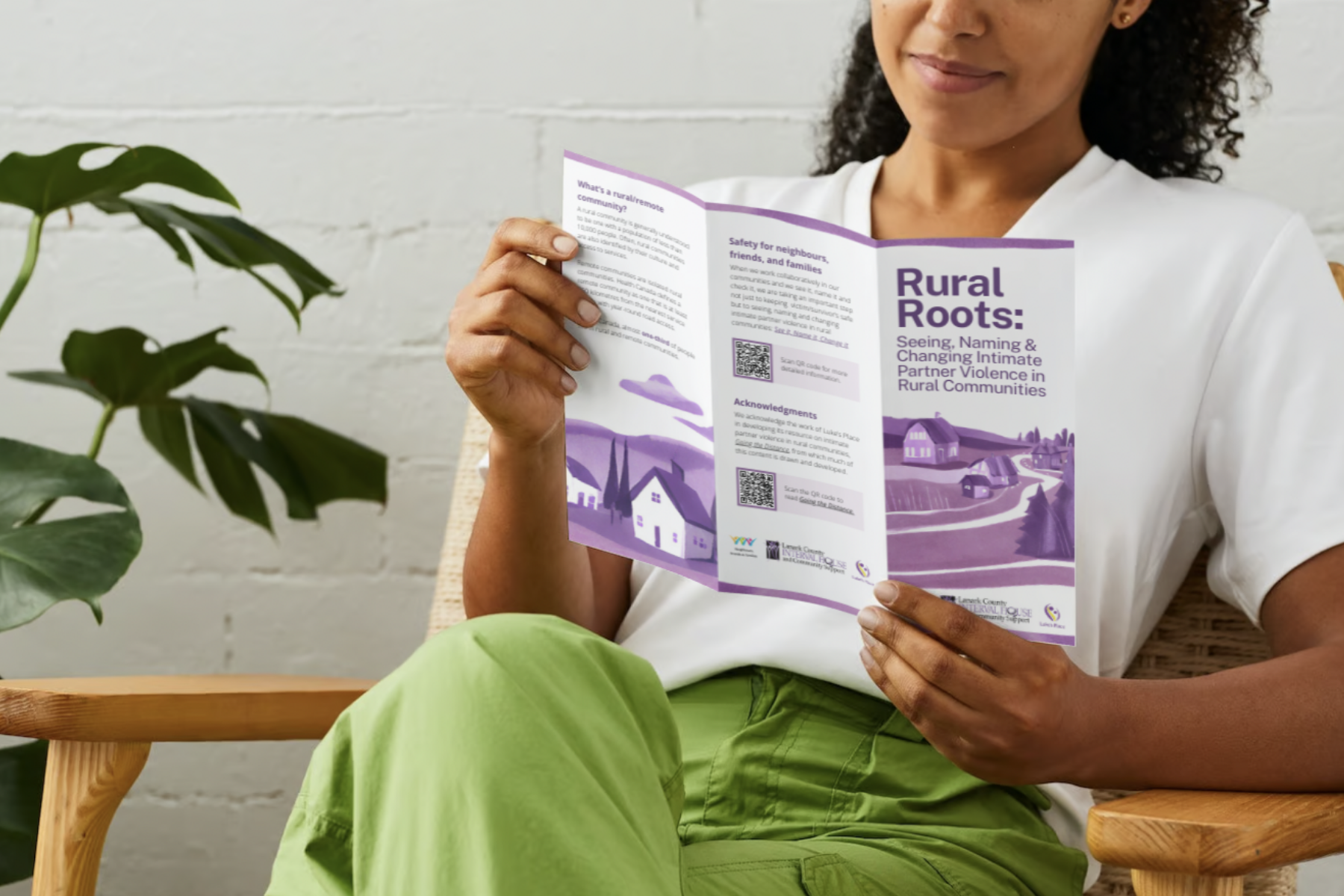
In early 2024, LCIHCS partnered with Luke’s Place and Neighbours, Friends and Family to create the Rural Roots iniative.Born from a commitment to address intimate partner violence (IPV) in rural areas, Rural Roots will equip individuals with the knowledge and tools to support survivors within their rural communities.
The genesis of Rural Roots is in the webinar, “A Rural Inquest: The Role of Neighbours, Friends and Families in Keeping Women Safe,” which delved into the inquest into the 2015 murders of three women in a rural community in eastern Ontario. Rural Roots strives to bridge gaps in understanding and support for survivors of IPV in rural communities.
Rural IPV presents distinct challenges that are frequently overlooked in urban centric narratives. For example, rural victim/survivors are 30% more likely to face firearm threats compared to their urban counterparts. Rural Roots empowers individuals to take meaningful action through a simple framework: See it, Name it, Check it.
See it: be aware of common warning signs of IPV so you know it when you see it.
Name it: for what it is, to yourself, and to the person you are concerned about.
Check it: for danger, for yourself, and reach out for community expertise.